Jul.22,2026
Share:
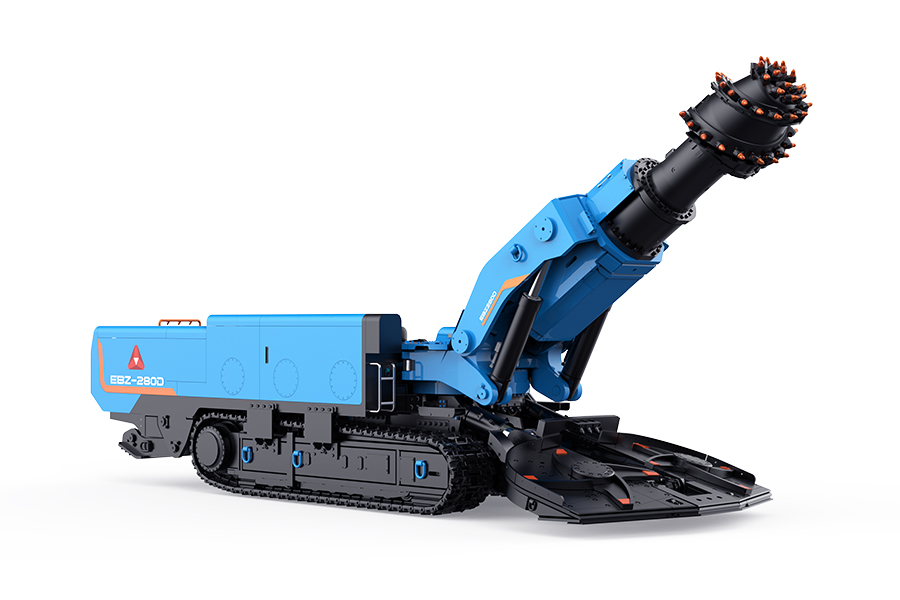
A Roadheader Machine is an essential tool in underground construction and mining operations, delivering precision and efficiency when it comes to tunneling and excavation. This sophisticated equipment employs a powerful rotating drum with sharp, heavy-duty bits to cut through rock and soil, allowing for the successful completion of various projects such as highways, metro systems, and other underground facilities. Understanding the main components of a Roadheader machine not only demystifies its function but also highlights the significant value it brings to businesses in the construction and mining sectors.
Historically, the evolution of the Roadheader machine can be traced back to the mid-20th century when advancements in engineering and material science revolutionized underground excavation. This machinery emerged as a game-changer, offering a more flexible alternative to traditional drilling and blasting methods. With enhanced efficiency, Roadheaders became integral to projects requiring close tolerances and minimal vibration, thus contributing to safer and more sustainable excavation practices.
The practical significance of a Roadheader machine is manifold. It expertly moderates the forces exerted on the ground, minimizing the risk of environmental damage and ensuring worker safety. Equipped to operate in confined spaces, Roadheaders can scan and adjust their operations in real-time, maximizing productivity and accuracy. For instance, operating with a precision of 0.01mm, a Roadheader can achieve high-quality cuts that enable faster construction timelines. In real-world applications, utilizing this technology has enabled companies to complete construction projects on time and under budget, positioning them as leaders in their respective fields.
Despite its advantages, misconceptions about the Roadheader machine persist. Some professionals mistakenly equate it solely with conventional drilling equipment; however, Roadheaders' multifaceted capabilities set them apart. Moreover, novices may underestimate the importance of maintenance and operator training, resulting in errors that can lead to downtime or operational inefficiencies. Understanding that a Roadheader's efficient operation depends not just on its mechanical components but also on proper training and regular maintenance is critical for maximizing investment.
To elucidate further, consider a case study involving a major infrastructure project utilizing the Roadheader machine from Weishi. They faced challenges with varying rock formations and required adaptability in their methodology. By incorporating the main components of a Roadheader machine, including the drum, conveyor system, and dust collection system, the team achieved effective excavation with minimized disruption. Their success can be attributed to precise monitoring and adjustments made possible by the advanced technology embedded in the equipment, illustrating how effectively these machines can handle challenges in real-world scenarios.
In summary, understanding the main components of a Roadheader machine is crucial for businesses invested in construction or mining. With a focus on precision, safety, and adaptability, this machinery not only streamlines operations but also enhances overall project outcomes. As you dive deeper into this topic, consider exploring the robust features offered by industry leaders like Weishi. By equipping your team with knowledge and the right tools, you'll position your organization to better tackle the complexities of modern excavation projects. For further insights and resources on Roadheader machines, visit Weishi's official website.
Require More Customized Productsand Technical Advice?
Send over your requirements and we can offer one-stop technical advice and Industry solutions to meet your needs.