Nov.18,2026
Share:
Before buying Underground Tunneling Equipment, request documents that show the machine meets the safety, environmental, and technical rules that apply at your project site. These may include a declaration of conformity, risk assessment, inspection reports, and factory or component test records. Checking the right evidence helps protect workers, avoid import or commissioning delays, and reduce costly downtime. For buyers evaluating Weishi equipment, the key is to match each document to the machine configuration, destination country, and contract requirements.
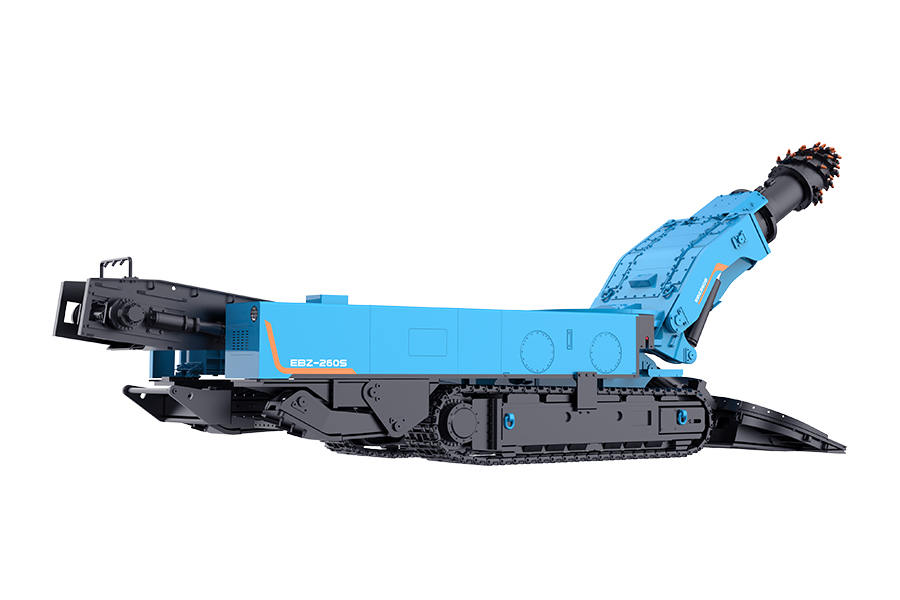
Tunneling machinery has evolved from largely mechanical excavation systems into complex equipment combining cutting heads, hydraulic circuits, electrical drives, control systems, conveyors, and monitoring technology. As machines became more powerful and automated, buyers and regulators placed greater emphasis on documented risk controls, traceable components, and tested safety functions.
Today, a certificate is only one part of the evidence. A buyer also needs to understand what the document covers, who issued it, which machine model it identifies, and whether its scope matches the equipment being delivered. A valid document for one configuration does not automatically cover a customized machine or a different destination market.
For project owners and contractors, a thorough review can support tender approval, customs clearance, site acceptance, operator training, and maintenance planning. It also gives the procurement team a clear basis for comparing Underground Tunneling Equipment from different suppliers.
There is no single certificate that applies to every tunneling machine worldwide. Start with the country where the equipment will be placed on the market and used, then confirm the required documents with the importer, project owner, and local safety authority. Ask the manufacturer to provide the following evidence where applicable.
For equipment sold in the European Union, request the applicable EU Declaration of Conformity and the technical information supporting it. The declaration should identify the manufacturer, product or model, relevant legislation, and standards applied. The EU Machinery Regulation (EU) 2023/1230 is scheduled to apply from 20 January 2027; before that date, the applicable machinery legislation and transition requirements must be checked for the product and placing-on-the-market date.
For the United Kingdom or other markets, ask which conformity route applies and request the corresponding declaration or approval documents. Do not assume that a CE mark, UKCA mark, or other marking is sufficient by itself: verify the machine’s scope, destination, date, and required supporting records.
Request a machine-specific risk assessment, preferably based on ISO 12100 principles. It should address hazards such as cutterhead access, entanglement, stored hydraulic energy, electrical shock, ground movement, fire, emergency egress, and maintenance inside confined areas. Confirm that identified risks are addressed through design, guarding, interlocks, operating procedures, and warnings—not warnings alone.
Depending on the machine and its design, ask whether relevant requirements in EN 16191 for tunnelling machinery, EN 60204-1 for electrical equipment of machines, and ISO 13849-1 for safety-related control systems have been applied. These standards are not a substitute for checking the laws and standards applicable to the specific sale.
For electrically powered equipment, request electrical schematics, protective-device details, inspection and test reports, and evidence against the applicable electrical safety requirements. Where relevant, ask for electromagnetic compatibility documentation under the rules in the destination market.
If the project involves a potentially explosive atmosphere, such as certain gas-bearing mines or tunnel environments, confirm whether ATEX, IECEx, or another local hazardous-area approval is required for the specific components and zone. Do not treat ordinary electrical conformity documents as proof of explosion protection.
Ask for the factory acceptance test (FAT) procedure and signed results for the delivered configuration. The test plan should identify the machine serial number, test date, acceptance criteria, instruments used, and any open corrective actions. Relevant checks may include emergency stops, interlocks, hydraulic pressure, conveyor operation, control-system alarms, and communication between subsystems.
Set measurable acceptance criteria in the purchase contract. For example, require 100% inspection of designated safety-critical functions, documented calibration status for test instruments, and delivery of the signed test dossier before shipment. These are buyer-defined controls, not universal certification rules. Agree on a written response target—such as an initial response within 24 hours—for safety-critical nonconformities during FAT or commissioning.
For load-bearing structures, cutterhead components, pressure vessels, or high-pressure hydraulic assemblies, request traceable material certificates, welding procedure and welder qualification records, and inspection reports where specified by the design or contract. Depending on the component and acceptance plan, test references may include ASTM E8/E8M for tensile testing or ASTM E23 for notched-bar impact testing. These methods only apply when appropriate to the material and test objective; they do not certify the complete machine.
Where non-destructive testing (NDT) is required, define the method, coverage, acceptance criteria, and qualified personnel in advance. A generic statement such as “welds inspected” is less useful than a report identifying the weld, inspection method, result, and any repair or retest.
An ISO 9001 certificate can indicate that a supplier operates a quality-management system, but it is not a product safety certificate and does not prove that a particular machine passed its tests. Check the certificate’s issuing body, validity dates, and scope. You can also request the inspection and test plan (ITP), nonconformity procedure, spare-parts plan, and service-support arrangements.
| Document or evidence | What to verify | Why it matters |
|---|---|---|
| Declaration of conformity or market approval | Correct model, manufacturer, destination market, legislation, and date | Supports lawful placement on the market and project review |
| Risk assessment | Machine-specific hazards and documented risk-reduction measures | Shows how safety risks are controlled |
| FAT and inspection reports | Serial number, acceptance criteria, results, instruments, and corrective actions | Provides evidence of the delivered machine’s condition |
| Material and welding records | Traceability to components, procedures, inspections, and repairs | Supports structural and pressure-system verification |
| Quality-system certificate | Issuer, scope, validity, and supplier identity | Helps assess manufacturing controls, but does not replace product testing |
| Operating and maintenance manuals | Language, emergency instructions, service intervals, and configuration match | Supports safe operation and long-term maintainability |
Use a documented review rather than relying on a certificate logo or a sales statement. This process works for Weishi and other Underground Tunneling Equipment suppliers:
Consider a contractor evaluating a tunnel-boring machine for a project with a fixed launch date. The procurement team asks the supplier for a declaration covering the correct model, the machine-specific risk assessment, electrical drawings, and the FAT dossier. During review, it finds that the functional test report refers to an earlier control-system revision.
The contractor pauses document approval, requests a test on the final configuration, and records the revised report and corrective-action closure before shipment. It also sets a contractual requirement for complete material traceability on specified pressure components and a 24-hour initial response to safety-critical commissioning issues. This example illustrates a verification process, not a claim about any particular supplier: linking records to the delivered configuration makes evidence more useful and reduces avoidable acceptance delays.
Before purchasing, focus on documents that prove the machine’s market compliance, risk controls, component traceability, and tested performance. Verify scope and authenticity, distinguish management-system certificates from product evidence, and write acceptance requirements into the contract.
For buyers considering Weishi Underground Tunneling Equipment, request a project-specific document package and clarify which approvals and tests apply to your destination and operating conditions. A careful review before the purchase order can make tender approval, delivery, and commissioning more predictable. Use the checklist above to begin your supplier discussion and ask for evidence tied to the exact machine you plan to buy.
Require More Customized Productsand Technical Advice?
Send over your requirements and we can offer one-stop technical advice and Industry solutions to meet your needs.