
Operation Manual
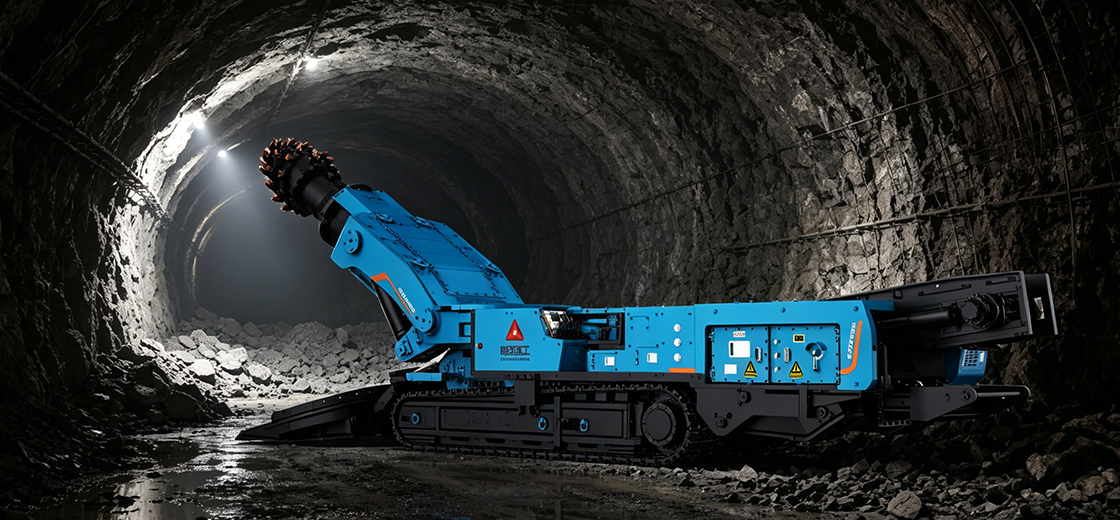
Equipment Overview
This tunneling machine is suitable for roadway tunneling operations in coal mines, non-coal mines, and tunnel projects, integrating cutting, loading, transportation, traveling, and spray for dust suppression. The equipment adopts a modular design, featuring high structural strength, convenient operation, and simple maintenance, and can adapt to continuous tunneling construction under different geological conditions.
Safety Operation Procedures

Operators must undergo professional training and pass the examination before taking up their posts. It is strictly prohibited to operate without a certificate.
Before starting work, inspect the working environment to ensure that the supports are intact, there is no risk of spalling or roof collapse, and the tunnel cross-section meets the requirements for equipment passage.
Before starting the machine, check the emergency stop button, lighting, warning devices, and spray dust suppression system to ensure they are functioning properly.
No one is allowed to stand within the equipment's operating range, and personnel must keep away from the cutting arm and blade area during cutting operations.
Overloading and forced cutting of hard rocks are strictly prohibited. In case of abnormal geological conditions, the machine must be stopped immediately for handling.
When conducting equipment maintenance, oil injection, or replacing cutting picks, the equipment must be shut down, powered off, locked, and a warning sign must be hung.
If any abnormalities such as abnormal noise, unusual smell, or severe vibration occur during operation, the machine should be stopped immediately for inspection.
Pre-Start Inspection
Appearance inspection: The machine body, cutting arm, scraper blade, scraper conveyor, track, etc. are free from deformation, cracking, and looseness.
Hydraulic system: The oil level in the tank is normal, the pipelines are free of leakage, and the pressure gauge displays normally.
Electrical system: The cables are not damaged, the wiring is secure, and all switches and buttons operate flexibly and reliably.
Cooling and spray: The waterway is unblocked, the nozzle is not blocked, and the water pressure meets the dust suppression requirements.
Inspection of wearing parts: The cutting picks are complete and intact, the scrapers are not missing, and the track tension is appropriate.
Lubrication system: Apply lubricating grease to each lubrication point as specified to ensure proper lubrication.

Pre-Start Inspection
Startup Process
Turn on the main power switch and confirm that the power supply is normal.
Start the hydraulic pump motor, run it without load for 3 to 5 minutes, and check the system pressure and operating sound.
Turn on the spray dust suppression system and confirm that the water circuit is normal.
Start the scraper conveyor and the blade cylinder in sequence, and enter standby mode.
Cutting Operation
Operate the lifting and rotating handle of the cutting arm to align the cutting head with the position to be cut.
Feed slowly and adjust the cutting speed according to the hardness of the coal and rock to avoid impact loads.
Cooperate with the scraper to collect materials, maintain continuous material conveyance, and prevent chain jamming and material blockage.
Strictly control the cutting depth and span to ensure the formation of the tunnel is regular
Walking Operation
Operate the walking handle to control the device's forward, backward, and turning movements.
Observe the surrounding environment while walking, move at a low speed and steadily, and avoid sudden stops or turns.
Check the tension of the track and the status of the drive device before long-distance walking.
Shutdown Procedure
Stop cutting and reset the cutting arm to a safe position.
Stop the scraper conveyor and shut down the spray system.
Stop the hydraulic pump motor, disconnect the main power supply, and lock it.
Clean the floating coal and rock debris from the machine body and ensure the equipment is well cleaned.
Routine Maintenance and Upkeep
Inspect the wear condition of the cutting teeth for each shift, and replace them promptly if the wear exceeds the acceptable limit.
Check the hydraulic oil and lubricating oil levels daily, and replace the oil products periodically.
Regularly clean the filter, cooler, and spray nozzle to prevent blockage.
Check the tightness of all pin shafts and connecting bolts, and promptly tighten any loose parts.
Regularly lubricate key components such as the traveling mechanism, slewing bearing, and lifting cylinder.
Common Faults and Solutions
Weak Cutting Force: Check the hydraulic pressure, the working condition of the oil pump, and the wear condition of the cutting teeth.
Scraper chain jamming: Clear the jammed material, check the chain tension and the integrity of the scraper.
Spray does not work: Check whether the water source, pipeline, nozzle, and water pump are blocked.
Running off track: Adjust the tension of the track and inspect the drive motor and braking system.
Excessively high oil temperature: Check the cooling system, clean the radiator, and replenish the hydraulic oil.
Transportation and Storage
During equipment transportation, ensure it is securely fixed, and the cutting arm and blade are retracted to their smallest size.
For long-term storage, it should be placed in a dry, ventilated, and non-corrosive environment, and proper anti-rust treatment should be carried out.
During storage, conduct regular power-on test runs to prevent rusting and sticking of components.
Require More Customized Productsand Technical Advice?
Send over your requirements and we can offer one-stop technical advice and Industry solutions to meet your needs.