
EBZ280A Hard Rock Roadheader Case Study at Datong Coal Mine
Share:
The Datong Coal Mine project demonstrates the application of the Weishi EBZ280A hard rock roadheader in a large full-rock roadway excavated through coarse sandstone.
The project involved a 6.0 m-wide and 4.9 m-high roadway with a 6° gradient. The surrounding rock was classified as F9 coarse sandstone, corresponding to an approximate uniaxial compressive strength of 90–100 MPa.
Under these demanding geological conditions, the EBZ280A achieved a maximum monthly advance rate of 113 m, demonstrating its suitability for mechanized roadway development in medium- to high-strength rock formations.
Project Overview
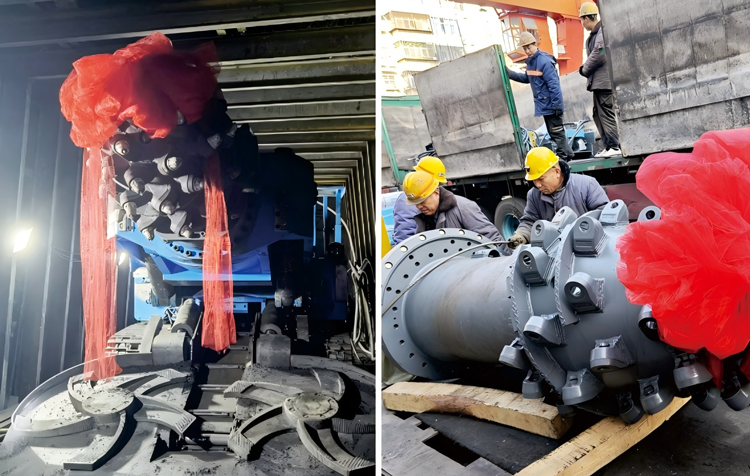
Equipment Model: EBZ280A
Excavation Section: 6.0m (width) × 4.9m (height)
Rock Lithology: Coarse sandstone
Rock Hardness: F9 (approximately 90–100 MPa UCS)
Gradient: 6° (inclined)
Tunnel Condition: Full rock (no coal seam)
Maximum Monthly Advance Rate: 113 meters
Project Background
The mine required a mechanized excavation solution for a large-section roadway located entirely within coarse sandstone.
Unlike coal-rock or mixed-face roadways, a full-rock roadway places continuous cutting loads on the roadheader. The machine must maintain sufficient cutterhead torque, chassis stability and material-removal capacity throughout the excavation cycle.
The roadway dimensions also created a demanding positioning requirement. With a width of 6.0 m and a height of 4.9 m, the excavated profile covered approximately 29.4 m². The roadheader therefore needed sufficient cutting reach to complete the designed cross-section while limiting repeated machine repositioning and excessive profile correction.
In addition, the 6° roadway gradient required reliable crawler traction, stable machine positioning and effective movement of broken rock away from the cutting face.
Main Excavation Challenges
The principal challenge was the F9 coarse sandstone, with an estimated compressive strength of approximately 90–100 MPa.
Coarse sandstone can create demanding roadheader conditions because its mineral composition and grain structure may increase cutter pick wear, cutting vibration and impact loading.
In this type of formation, equipment selection cannot depend on cutting motor power alone. The overall result is influenced by:
The roadheader therefore needed a cutting system capable of maintaining stable engagement with the rock while controlling vibration and wear.
The 6.0 × 4.9 m roadway required the roadheader to cover a relatively large cutting envelope.
A machine with insufficient positioning height or width would require frequent repositioning and additional trimming. This can reduce effective cutting time and make it more difficult to maintain a consistent roadway profile.
The selected machine needed to provide:
Because the roadway contained no coal seam, the cutting head operated continuously in rock rather than alternating between softer coal and harder rock bands.
This increased the importance of:
The 6° gradient was not exceptionally steep, but it still affected crawler traction, machine positioning and muck transfer.
The roadheader had to remain stable while cutting and avoid excessive movement caused by the reaction forces generated at the cutterhead.
The downstream conveying arrangement also needed to remove broken sandstone effectively on the inclined roadway.
The EBZ280A was selected as a balanced hard rock roadheader for medium- and large-section underground roadways.
Its equipment configuration matched the main requirements of the Datong project:
Compared with smaller roadheaders, the EBZ280A offered greater cutting power and structural stability for full-rock excavation. Compared with significantly larger machines, it provided a practical balance between underground transport, maneuverability, acquisition cost and cutting performance.
EBZ280A Configuration for the Project
The roadheader used a boom-mounted cutting system to excavate the roadway profile progressively.
The cantilever design allowed the operator to move the cutting head vertically and laterally across the face. This made it possible to excavate the roof, sidewalls, center section and floor according to a controlled cutting sequence.
For hard sandstone, the cutting sequence is important. Excessively deep engagement can increase vibration and cutter loads, while shallow, controlled passes can improve stability and reduce peak impact on the picks and tooth holders.
The crawler chassis provided the reaction force required to keep the cutting head engaged with the rock.
A stable machine platform is especially important in hard-rock excavation because excessive body movement can cause:
The crawler system also allowed the machine to advance and reposition within the 6° inclined roadway.
Broken sandstone was collected by the front loading system and transferred through the onboard conveyor to the mine’s downstream haulage equipment.
Continuous muck removal was necessary to prevent broken rock from accumulating around the cutting face and interfering with the next cutting pass.
The loading and conveying system supported:
Hard-rock cutting generates substantial dust and heat at the cutter picks.
Internal and external spray systems help:
Actual dust-control performance depends on water pressure, nozzle condition, ventilation and mine operating procedures.
Monitoring of motor load, hydraulic temperature and other operating conditions helps operators identify abnormal resistance before it develops into a major fault.
During hard-rock excavation, the operator should pay particular attention to:
These operating indicators support timely adjustment of the cutting depth, boom movement and machine advance.
For a hard-rock roadway project, equipment delivery is only one part of the solution.
Recommended technical support can include:
The exact support scope should be confirmed according to the project location and contract.
Require More Customized Productsand Technical Advice?
Send over your requirements and we can offer one-stop technical advice and Industry solutions to meet your needs.
Related Products
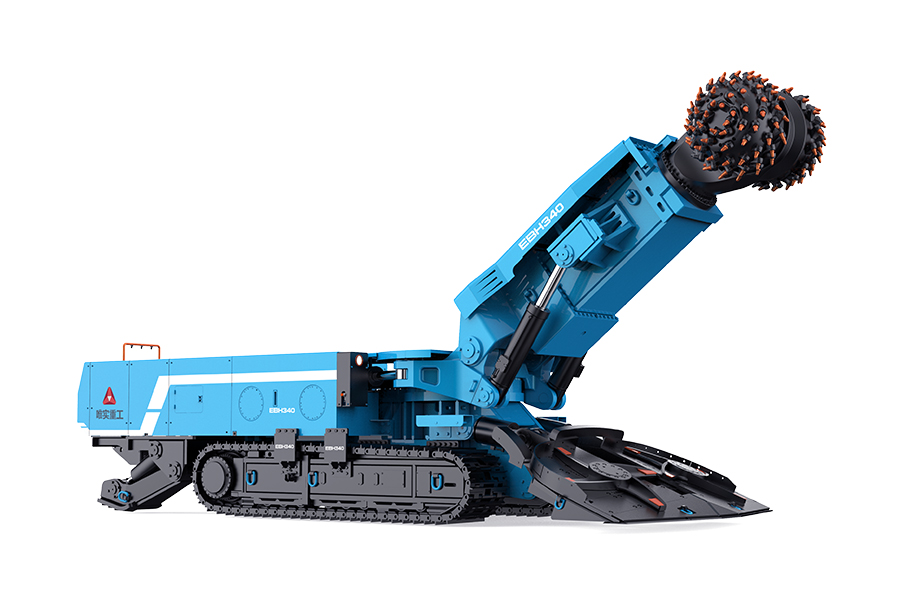
The Weishi EBH340 heavy-duty cantilever roadheader, as Weishi Heavy Industry's flagship horizontal axis hard rock tunneling equipment, is specifically designed for tackling challenging conditions in deep wells with large cross-sections and high-density, ultra-hard rock tunnels. It directly addresses industry pain points such as high wear and tear on cutting tools, severe machine vibration, and poor tunnel formation. The machine features a 140-ton heavy-duty frame paired with a powerful 540kW power system and a patented horizontal axis cutting head, capable of conquering hard rock strata with compressive strength ≤130MPa, achieving a maximum cutting area of 45㎡, truly realizing one-time formation of large-section tunnels. It is the ultimate solution for tunneling large-section tunnels in ultra-hard rock.
Roadheader
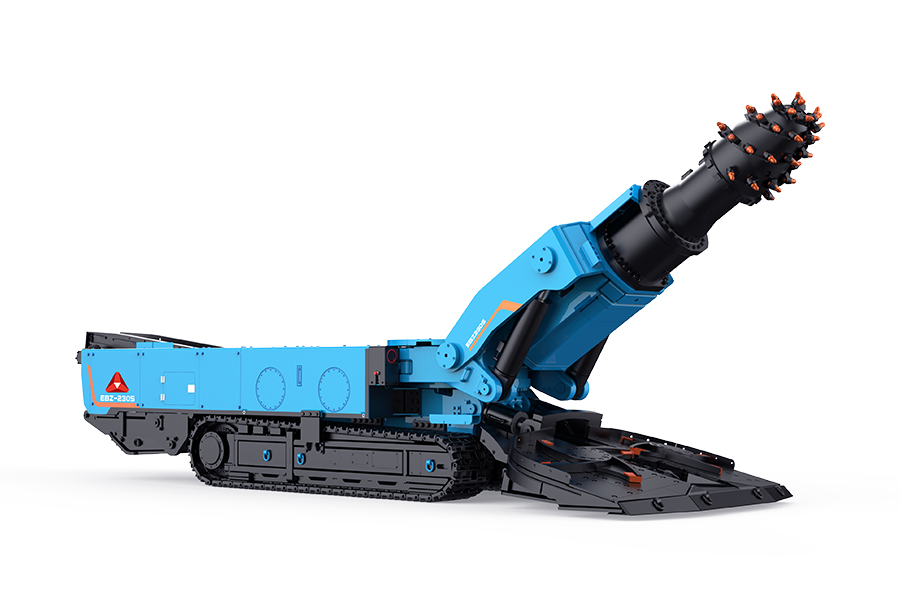
The Weishi EBZ230A heavy-duty cantilever roadheader is a high-performance, cost-effective machine suitable for medium-hard rock roadways up to 85MPa. It is specifically optimized for addressing on-site challenges in small and medium-sized mine roadways, hard rock cutterheads in development roadways, cantilever leakage, poor roadway slope, and easy blockage by gangue. With its robust 80-ton self-weight, it meets the rigidity standards of the 260-type roadheaders on the market, setting a high-performance benchmark for medium-sized hard rock roadway excavation. The machine features a 362kW dual-motor drive system, including a 230kW cutting motor, enabling efficient operation in full-rock and semi-coal-rock roadways with compressive strength ≤85MPa. It has a maximum cutting area of 28.8㎡, perfectly meeting the cross-sectional requirements of mainstream mines.
Roadheader
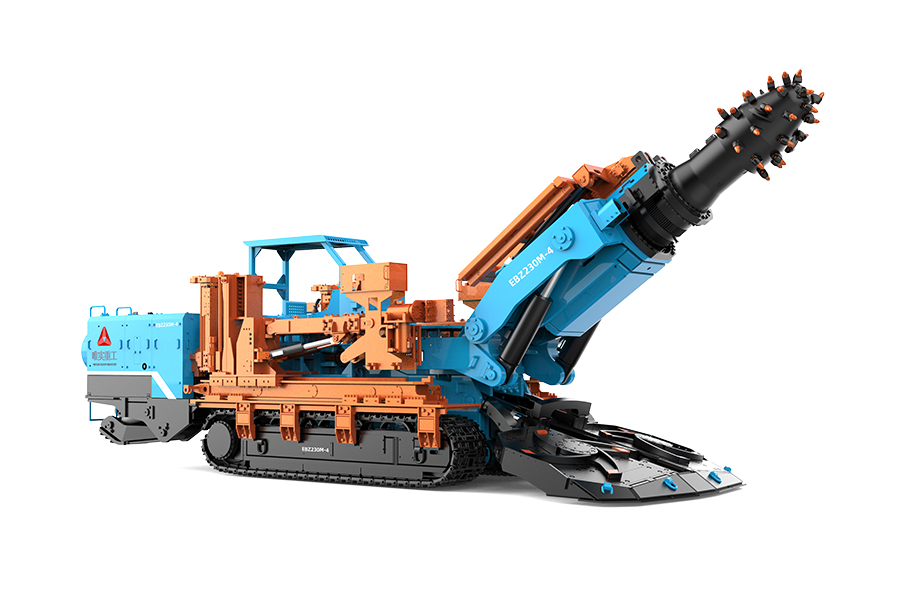
Cutting power: 230 kW
Number of bolting rigs: 4
Maximum cutting area: 26.4 m²
Specified rock strength: ≤85 MPa
Machine weight: 95 t
Maximum drilling depth: 18 m
Roadheader-Bolter
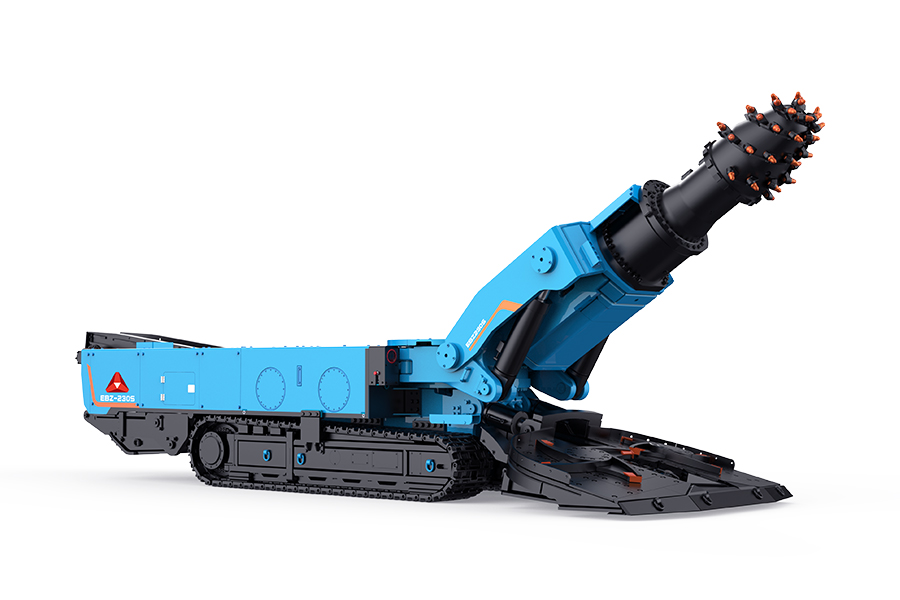
The Weishi EBZ230S heavy-duty cantilever roadheader is specifically designed for small-section, high-hardness rock formations in coal mines. Despite its compact 75-ton body, it delivers uncompromised core performance, making it a professional solution for tunneling in narrow, hard rock tunnels. With a powerful 362kW engine, it can efficiently tackle hard rock with compressive strength ≤85MPa, achieving a maximum cutting area of 21.6㎡, demonstrating exceptional performance in confined spaces.
Roadheader
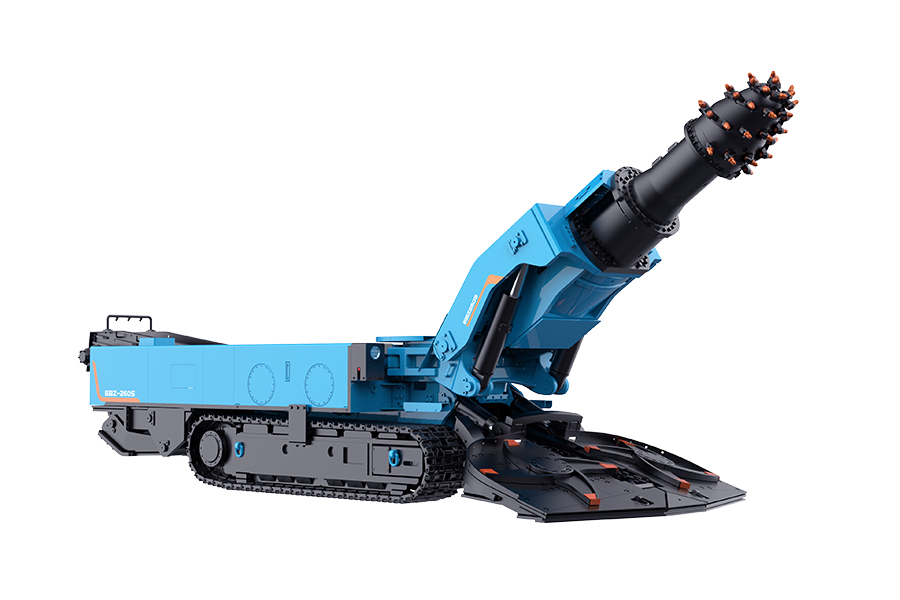
The Weishi EBZ260H heavy-duty cantilever roadheader is specifically designed for medium-to-high hardness, large-section roadways in coal mines. With a self-weight of 90 tons, it surpasses conventional 260-type roadheaders on the market in terms of robust construction and 420kW dual-motor drive, exceeding the power and load-bearing capacity of comparable products. The 260kW high-power cutting motor can efficiently tackle hard rock with compressive strength ≤90MPa, achieving one-time roadway forming of up to 30㎡. All wear-resistant components have been comprehensively upgraded, significantly reducing the frequency of consumable replacements. It supports remote viewing of operating data via mobile phone and can be upgraded with an intelligent tunneling system. Multiple customized accessories adapt to various roadways, allowing one machine to cover multiple mining faces, resulting in high equipment reuse and balancing tunneling capacity, maintenance costs, and long-term intelligent upgrade needs.
Roadheader
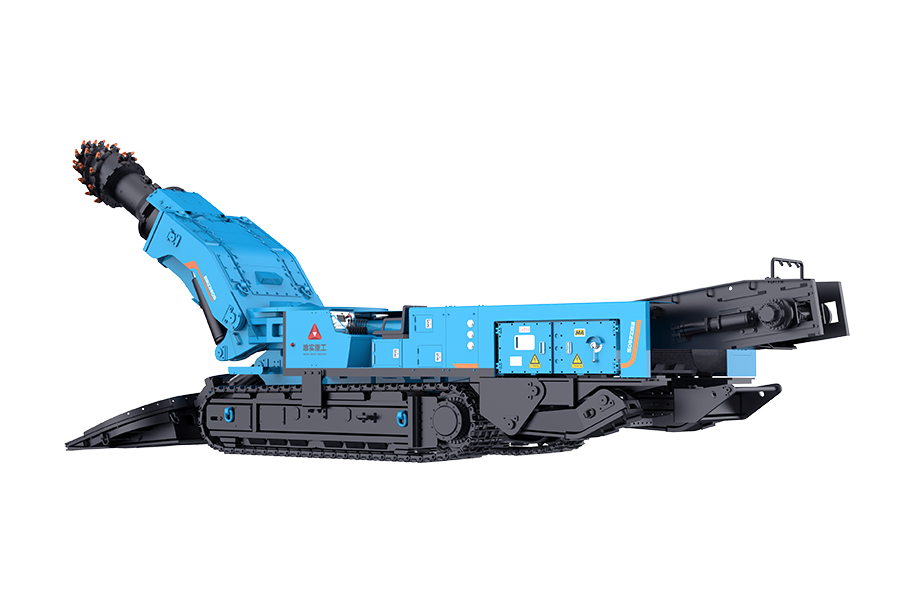
The Weishi EBZ260L heavy-duty cantilever roadheader, a pioneer in low-profile tunneling, is a specialized upgrade for tunneling equipment designed for low-profile roadways. The entire machine is deeply optimized to address industry pain points such as insufficient lifting capacity, limited cutting range, and the risk of roof snag due to excessive height in low-profile roadways. It is suitable for full-rock and semi-coal-rock roadways with compressive strength ≤90MPa. The machine features a lightweight 83-ton body, powered by dual 420kW motors, and a cutting head height of only 2150mm, allowing for interference-free operation in low-profile spaces. It can form a cross-section of 14.4–26.4㎡ in a single pass.
Roadheader
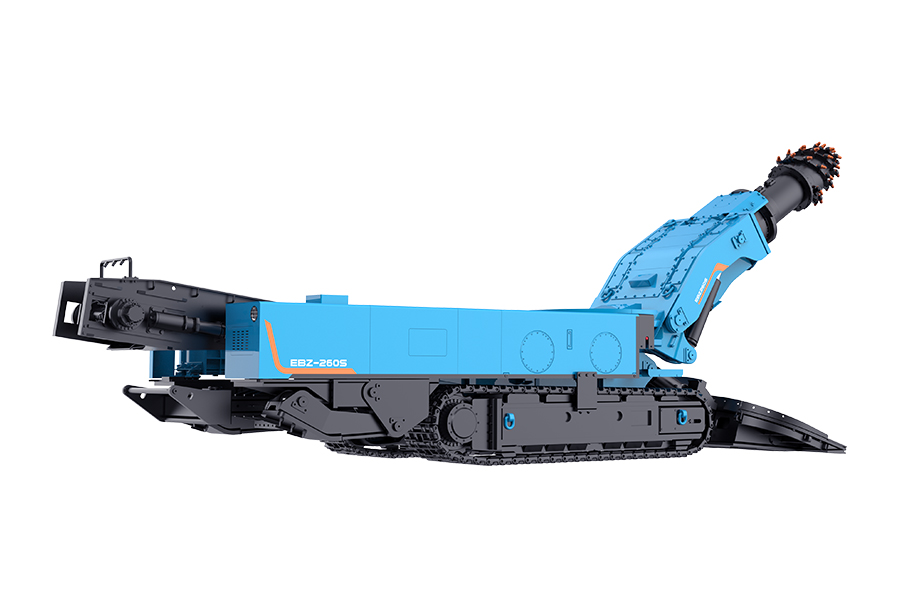
Compact and Powerful in Hard Rock, Big Impact in Small Sections
The VIS EBZ260S heavy-duty cantilever roadheader is a compact tunneling machine specifically designed for small-section hard rock tunnels. It directly addresses the pain points of underground construction, such as difficulty turning in narrow tunnels, limited operation in confined spaces, high wear and tear on hard rock cutting teeth, and easy slippage on the floor. With a compact 85-ton body, it achieves a 90MPa hard rock crushing capacity, making it the performance king for small-section hard rock tunnel excavation. The machine's 392kW power system and maximum cutting area of 28.8㎡ unleash powerful tunneling potential in confined spaces.
Roadheader
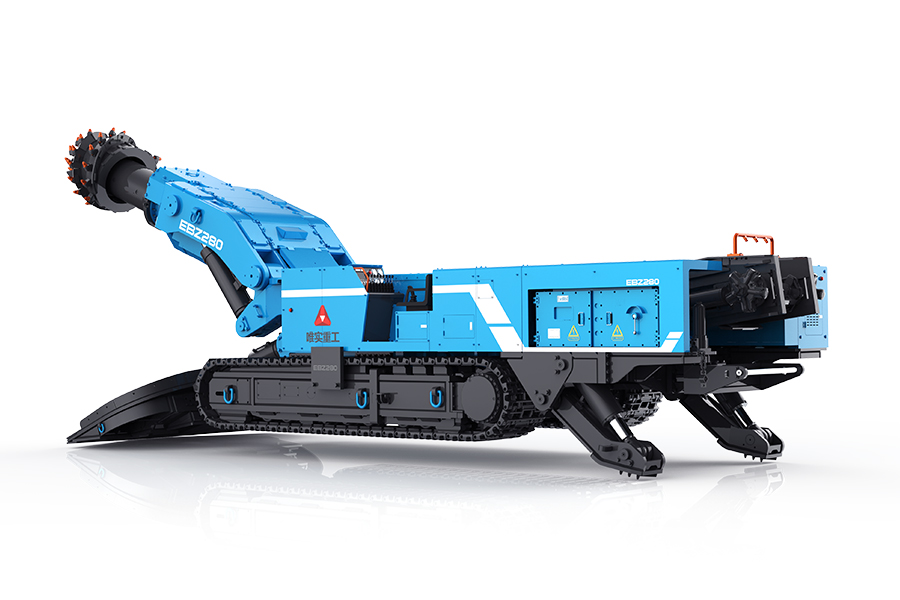
The King of Hard Rock (100 MPa), the Mainstay of Medium and Large Mines
The Weishi EBZ280A heavy-duty cantilever roadheader, a flagship model for hard rock mining launched in 2022, is designed to meet the four core needs of domestic small and medium-sized coal mines: mining conditions of medium-hard rock up to 100 MPa, mine budget control, multi-face rotation construction, and high wear and tear on vulnerable parts. We have created the EBZ280A, an economical and standardized roadheader, filling the market gap where smaller models have weak rock-breaking capabilities and larger models have excessively high procurement costs. The machine adopts a 440kW balanced power solution, a lightweight 98-ton body, and 0.155MPa ultra-low pressure tracks, balancing convenient underground transport and the ability to traverse muddy floors. It covers multiple cutting heights from 3.2 to 5.2 meters and can be adapted to various working faces, including roadways and development roadways, reducing the cost of idle equipment in mines. It is a high-performance, cost-effective main roadheader solution for medium-hardness rock formations.
Roadheader
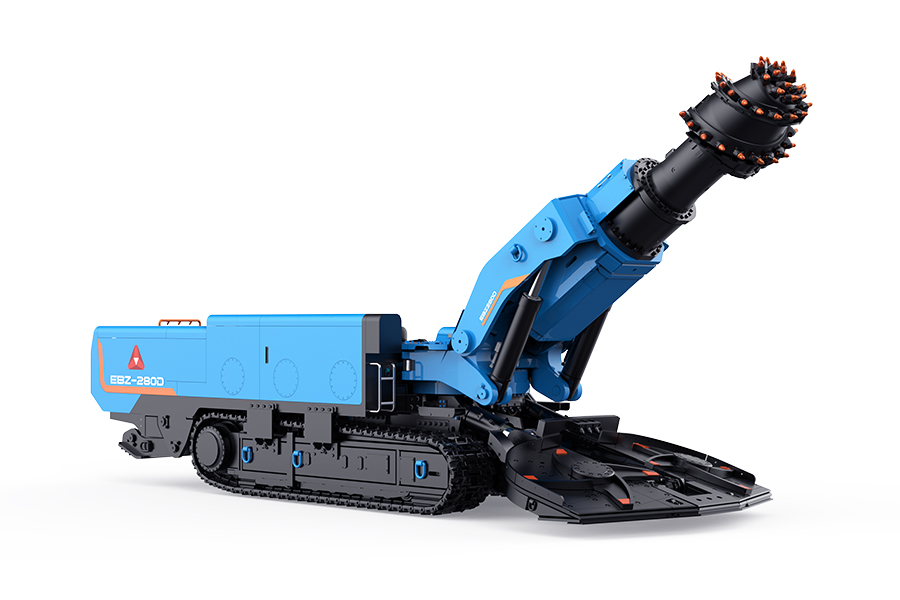
The VIS EBZ280D heavy-duty cantilever roadheader is specifically designed for hard rock construction in steep underground coal mine tunnels, boasting an industry-leading climbing ability of -25° to +23°. Its 110-ton heavy-duty chassis is equipped with a powerful 480kW motor, and a 280kW cutting motor capable of handling hard rock pressure ≤100MPa. A full set of specialized reinforcements for steep slopes enables efficient and routine tunneling in previously difficult steep hard rock tunnels, making steep-angle development roadway construction in mines no longer a challenge.
Roadheader
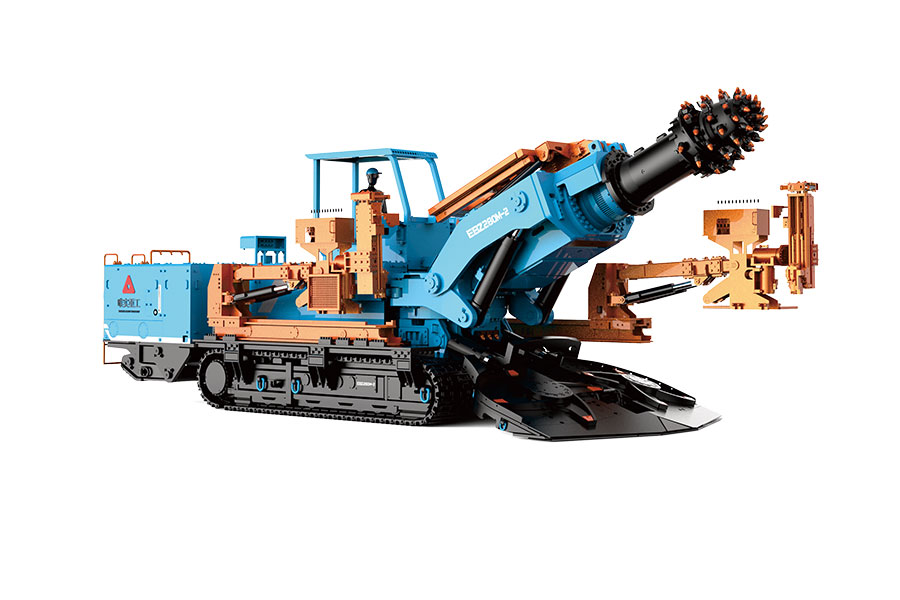
Cutting motor power: 280 kW
Number of bolting rigs: 2
Maximum cutting area: 33.8 m²
Specified rock strength: Up to 100 MPa
Machine weight: 115 t
Maximum drilling depth: 15 m
Roadheader-Bolter
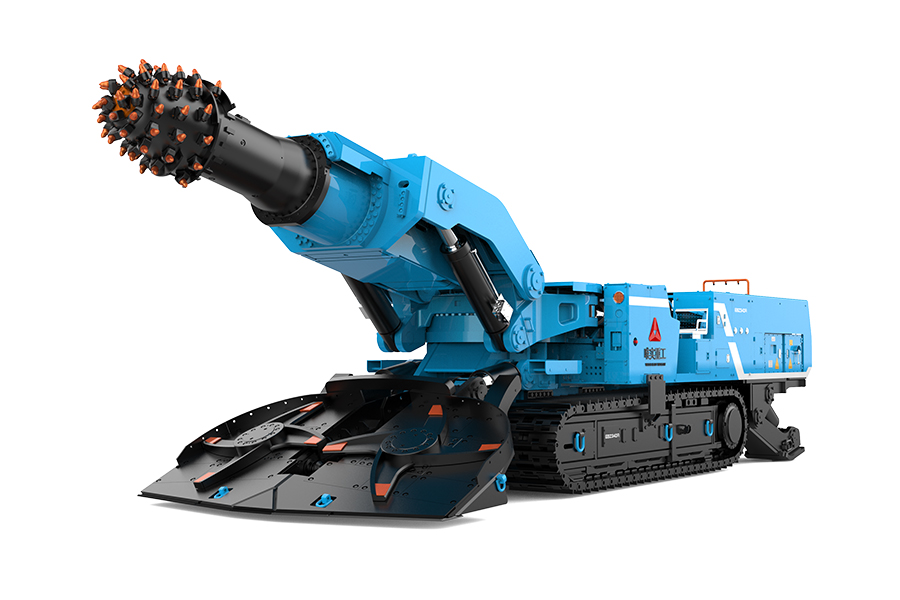
The Weishi EBZ340A heavy-duty cantilever roadheader is a flagship 128-ton longitudinal axis hard rock tunneling machine. Designed by Weishi Heavy Industry to meet the needs of deep-mining, multi-million-ton-level mines, it is specifically designed for directional drilling of ultra-large cross-sections and 130MPa-level dense, ultra-high hardness intact rock formations. It provides a one-stop solution to industry pain points such as severe vibration and poor cross-section formation in deep-well hard rock tunneling. It is fully adaptable to the construction conditions of deep, high-stress intact sandstone and limestone tunnels. The entire machine's power, cutting load capacity, and body stability have been upgraded to heavy-duty performance, achieving one-time forming of ultra-large cross-sections and long-term stable continuous tunneling.
Roadheader
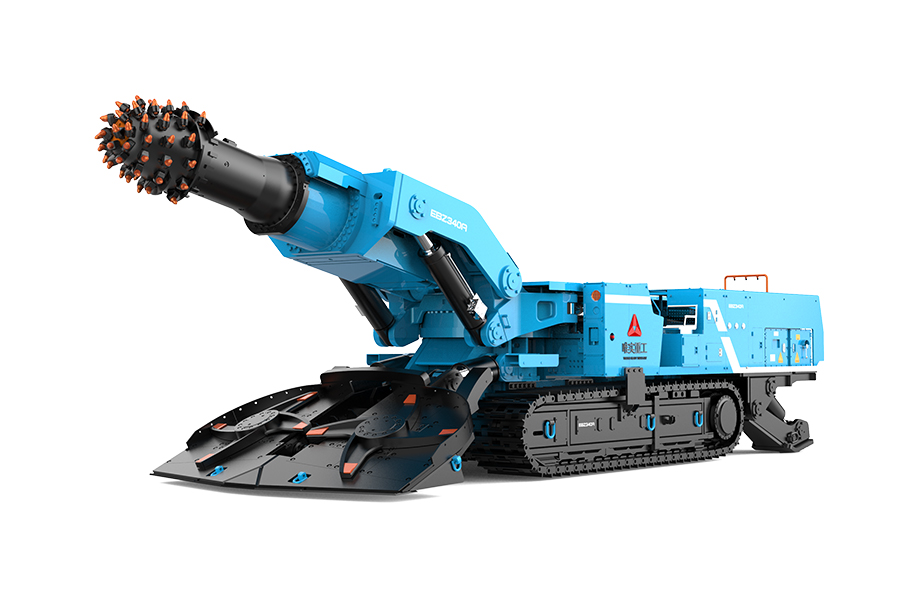
Large-section hard rock mainstay, a model of balanced performance
The Weishi EBZ340S heavy-duty cantilever roadheader is an iteration of the Weishi Heavy Industry's product, launched based on the core market demands of small and medium-sized mines for diverse roadways, medium-hardness rock formations, and control equipment procurement and face-turning costs. The balanced and lightweight EBZ340S precisely fills the market gap left by the cumbersome heavy-duty models and the weak rock-breaking capabilities of ordinary models. With a weight of 120-125 tons, it balances hard rock-breaking ability with flexible maneuverability, making it a balanced performance choice for large-section hard rock roadway excavation. The machine boasts a powerful 540kW engine, with a high-power 340kW cutting motor capable of efficiently handling hard rock ≤120MPa, a maximum cutting area of 38.35㎡, and a cutting height of 3.8m-5.9m, flexibly covering mainstream cross-section requirements.
Roadheader