
Nov.13,2026
Share:
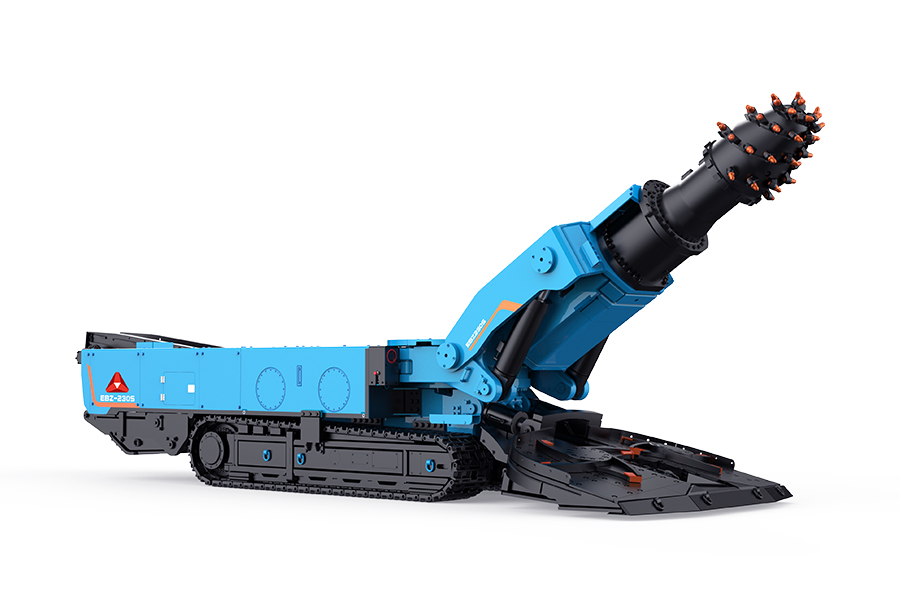
Choosing a 260kw Hard Rock Roadheader starts with more than a single compressive-strength number. You need to understand the full rock mass, match it to the machine's cutting system and rated capacity, and verify the choice against your tunnel dimensions, production target, and operating conditions.
This practical guide is designed for mine owners, contractors, engineers, and equipment purchasing teams. Use it to turn geological data into a defensible equipment specification before requesting quotations from suppliers such as Weishi.
Uniaxial compressive strength, or UCS, measures the stress a prepared rock specimen withstands before failure under compression. It is commonly reported in megapascals. Higher UCS generally means the rock is harder to cut, but UCS alone cannot predict excavation performance. A roadheader's performance also depends on mineral composition, abrasivity, fractures, bedding, moisture, confinement, cutting-head design, machine power, and the operator's cutting method.
As an initial screening guide, teams may group intact rock as follows, while confirming the bands against project-specific standards and laboratory results:
These ranges are not universal acceptance limits. Confirm the machine's stated cutting capacity for the exact rock type, UCS range, tunnel profile, and operating method. Ask the supplier to explain whether a quoted power figure is total installed power, cutting-head motor power, or another rating.
Use the geological model to identify the range of conditions, not only the average UCS. A tunnel face may contain hard bands, weak seams, quartz-rich zones, faults, and changes in groundwater over short distances. Peak strength and the proportion of difficult ground can have a greater effect on availability and tool consumption than the average value.
Before contacting manufacturers, assemble a consistent data package. Missing or inconsistent site information makes quotations difficult to compare and can lead to a machine that is undersized, oversized, or unsuitable for the tunnel.
The purchasing group does not need to own every testing instrument, but it should know which tools and records are required and who will provide them.
Write down the tunnel purpose, target cross-section, total length, expected geology by chainage, planned advance rate, and project completion date. Record restrictions on machine transport, power, ventilation, water, and muck removal. Separate fixed requirements from preferences so suppliers can identify genuine constraints.
Organize the geological data by excavation zone. For each zone, record UCS range, expected percentage of the route, abrasivity, jointing, water conditions, and confidence level. Do not rely only on one core sample or one average UCS value. Flag zones that may need a different cutting strategy or additional ground support.
Ask manufacturers to identify the proposed machine class and cutting-head configuration for each rock zone. Request documented operating experience in comparable rock, including UCS, abrasivity, tunnel size, cutting tools used, and achieved utilization. Treat broad claims such as suitable for hard rock as incomplete unless the supplier defines the conditions and evidence.
Check cutting-head motor power, total installed power, cutting force or torque where provided, boom reach, machine weight, traction, stability, and cutting-head speed. Confirm that the ratings apply to the offered configuration. Ask how performance changes as UCS and abrasivity rise and whether continuous operation at the expected duty cycle is permitted.
Check that the machine can excavate the required width, height, crown, floor, and corners without exceeding its reach or stability limits. Confirm that the conveyor and loading system can match the cutting rate. Verify electrical supply, cable management, water flow, dust suppression, ventilation, and compatibility with the planned haulage and support equipment.
Compare purchase price alongside cutting-tool consumption, expected maintenance, critical spares, operator training, commissioning, warranty, service response, and local parts availability. Request assumptions behind production and cost estimates, including shift pattern, utilization, geology, and tool-change time. A lower initial price may not mean a lower cost per excavated cubic metre.
Hold a technical review with geology, operations, maintenance, safety, and procurement representatives. Resolve deviations in writing. Where rock conditions are uncertain or severe, consider a witnessed cutting test, a rental or trial arrangement, or a contractual performance protocol with clearly stated measurement conditions. Confirm the final machine configuration, scope of supply, delivery schedule, acceptance criteria, and exclusions in the purchase documents.
Pick type, tool material, tip geometry, spacing, and mounting arrangement affect penetration, cutting forces, and wear. Ask the supplier which tools are proposed for the project's rock and whether the configuration can be changed between zones. Verify tool inspection intervals, replacement time, access safety, and spare-tool availability. Abrasive rock can create high tool costs even when its UCS is not the highest in the route.
Do not select a machine on a headline kilowatt figure alone. Request the technical data sheet and clarify cutting-head power, total installed electrical power, auxiliary loads, allowable duty cycle, and power available under site conditions. A 260kw Hard Rock Roadheader should be evaluated by its complete configuration and verified application range, not by the number in its name.
Actual advance depends on more than the cutting head. Include positioning, cutting, loading, haulage, tool replacement, scaling, support installation, inspections, and downtime. Ask suppliers to state production assumptions and to distinguish theoretical cutting rate from expected shift or monthly advance. Confirm whether the proposed mucking and conveyor system can remove material at the planned rate.
Send every supplier the same geological and tunnel data, then compare responses against a common checklist. Require clear answers rather than general statements. Weishi and other shortlisted manufacturers should be asked to identify assumptions, exceptions, and options in their proposals.
Use a weighted scorecard that gives priority to geological suitability, safety, maintainability, proven performance, and support. Compare purchase cost and lifecycle cost only after confirming that each offer meets the essential technical requirements. Record every assumption so the team can distinguish a genuine difference in value from a difference in quotation scope.
A single sample can miss hard bands, abrasive minerals, weak seams, or changes along the route. Use a range and map each value to its location. If the data are sparse, state the uncertainty and plan additional investigation or contractual safeguards.
Power cannot compensate for an unsuitable cutting head, poor ground conditions, weak muck removal, inadequate ventilation, frequent tool changes, or insufficient maintenance. Evaluate the complete excavation system and request evidence from comparable applications.
UCS measures strength, not how quickly a rock wears cutting tools. Request abrasivity information and a clear estimate of tool consumption. Include tool availability, replacement time, and disposal or handling requirements in the operating plan.
Suppliers may quote different definitions of installed power, cutting power, utilization, or advance rate. Ask for definitions and assumptions in writing. Compare like-for-like machine configurations and operating conditions.
A machine that fits the geology may still fail to fit the tunnel, power supply, transport route, or maintenance plan. Confirm dimensions, utilities, safety systems, spare parts, training, and service coverage before signing the order.
Agree on inspection documents, safety checks, testing responsibilities, operator training, and acceptance conditions in the contract. Define how performance will be measured, including the geology, operating hours, machine configuration, utilization, and exclusions. Avoid vague guarantees that do not specify measurement methods.
During commissioning and early operation, record UCS or mapped rock zone, tool type, cutting time, tool changes, downtime, maintenance events, advance, and mucking performance. Review the results with the supplier and site team. Use the records to refine tool selection, maintenance intervals, and production forecasts.
Proceed with purchase when the geological evidence, machine capability, site interfaces, lifecycle cost, and supplier support align with project requirements. If major uncertainty remains, seek additional testing, a witnessed trial, a revised configuration, or a documented risk-sharing arrangement. This process helps purchasing teams select equipment on demonstrated fit rather than promotional claims.
For a 260kw Hard Rock Roadheader, the strongest purchase decision comes from verified UCS and abrasivity data, a complete review of site conditions, and a supplier proposal tied to measurable operating assumptions. Work with Weishi to confirm the machine configuration and support plan for your project before finalizing the order.
Require More Customized Productsand Technical Advice?
Send over your requirements and we can offer one-stop technical advice and Industry solutions to meet your needs.