
Aug.03,2026
Share:
Roadheader machines are commonly used in underground coal mining, hard rock mine development, transportation and ventilation roadways, railway and road tunnels, underground chambers, utility tunnels, and selected hydropower excavation projects.
These machines use a rotating cutting head mounted on a movable boom to excavate rock or coal-rock formations. Loading and conveying systems then transfer excavated material away from the working face.
Unlike full-face tunnel boring machines, roadheaders can excavate different roadway profiles and adapt to changes in tunnel geometry within their working range.
The most suitable application depends on rock compressive strength, abrasiveness, excavation dimensions, available working space, and required production capacity.
Roadheader machines are specialized pieces of equipment employed in underground excavation, primarily utilized for tunneling projects in various industries. These powerful machines combine the functions of a miner and conveyor system, allowing efficient rock cutting and material transport simultaneously. The value of roadheaders lies in their ability to operate in confined spaces, providing unparalleled precision in tunneling activities, which is crucial for projects requiring exact specifications and minimized operational risks. With cutting tolerances as fine as 0.01mm, they enable contractors and engineers to undertake complex geological formations effectively.
Historically, roadheader machines were introduced in the mid-20th century as an innovative solution to the challenges of traditional drilling and blasting methods. As urban development increased and infrastructure projects advanced, the need for more refined excavation techniques became apparent. This led to the evolution of roadheaders, which have since become a staple equipment choice in the mining, construction, and civil engineering industries. From their early implementations, these machines underwent significant technological advancements, incorporating automation, remote operation, and efficiency improvements.
The practical applications of roadheader tunneling machines are vast and varied. These machines are commonly used in the following sectors:
Underground coal mines are among the main application environments for roadheader machines.
Roadheaders are used to develop transportation roadways, ventilation roadways, belt conveyor entries, and other underground passages required for mine operation.
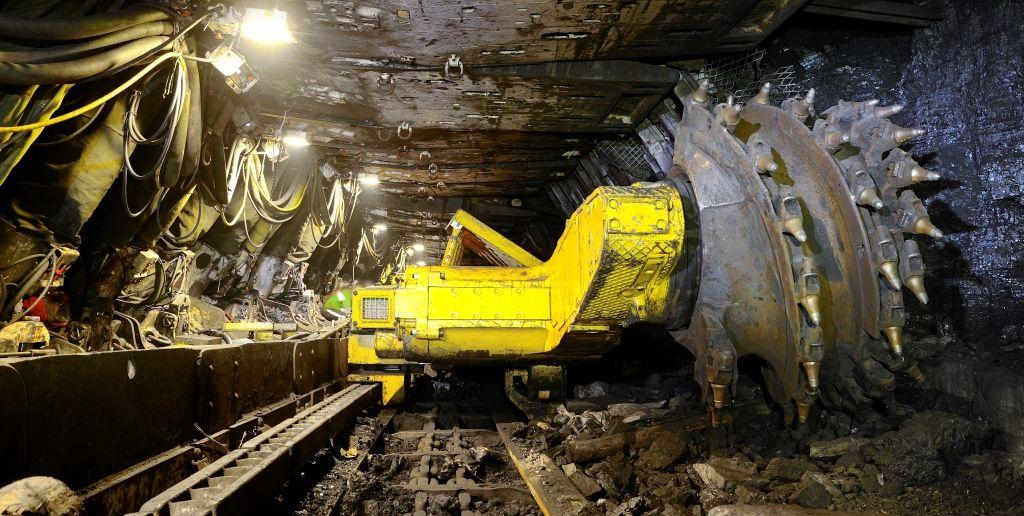
For extracting minerals and resources in underground mines, roadheaders facilitate the creation of tunnels that provide access to valuable materials with minimal disturbance to the surrounding environment.
Underground coal mines are among the main application environments for roadheader machines.
Roadheaders are used to develop transportation roadways, ventilation roadways, belt conveyor entries, and other underground passages required for mine operation.
● They combine mechanical cutting, loading, and conveying operations.
● Their cutting booms can form different roadway profiles.
● They are suitable for mechanized development in coal-rock and full-rock roadways when geological conditions permit.
● Different machine configurations accommodate different roadway dimensions and rock strengths.
For narrow development roadways, compact equipment is particularly important because large machines may face access and maneuvering restrictions.
The EBZ230S Small Cross-Section Roadheader is designed for smaller roadway sections. It features a 230kW cutting motor and a maximum cutting area of 21.6m², making it a relevant model for mining projects with restricted excavation dimensions.
Roadheader machines are also used in underground mines where development roadways must pass through rock formations.
Applications include access roadways, crosscuts, transportation passages, and other excavations supporting underground mining operations.
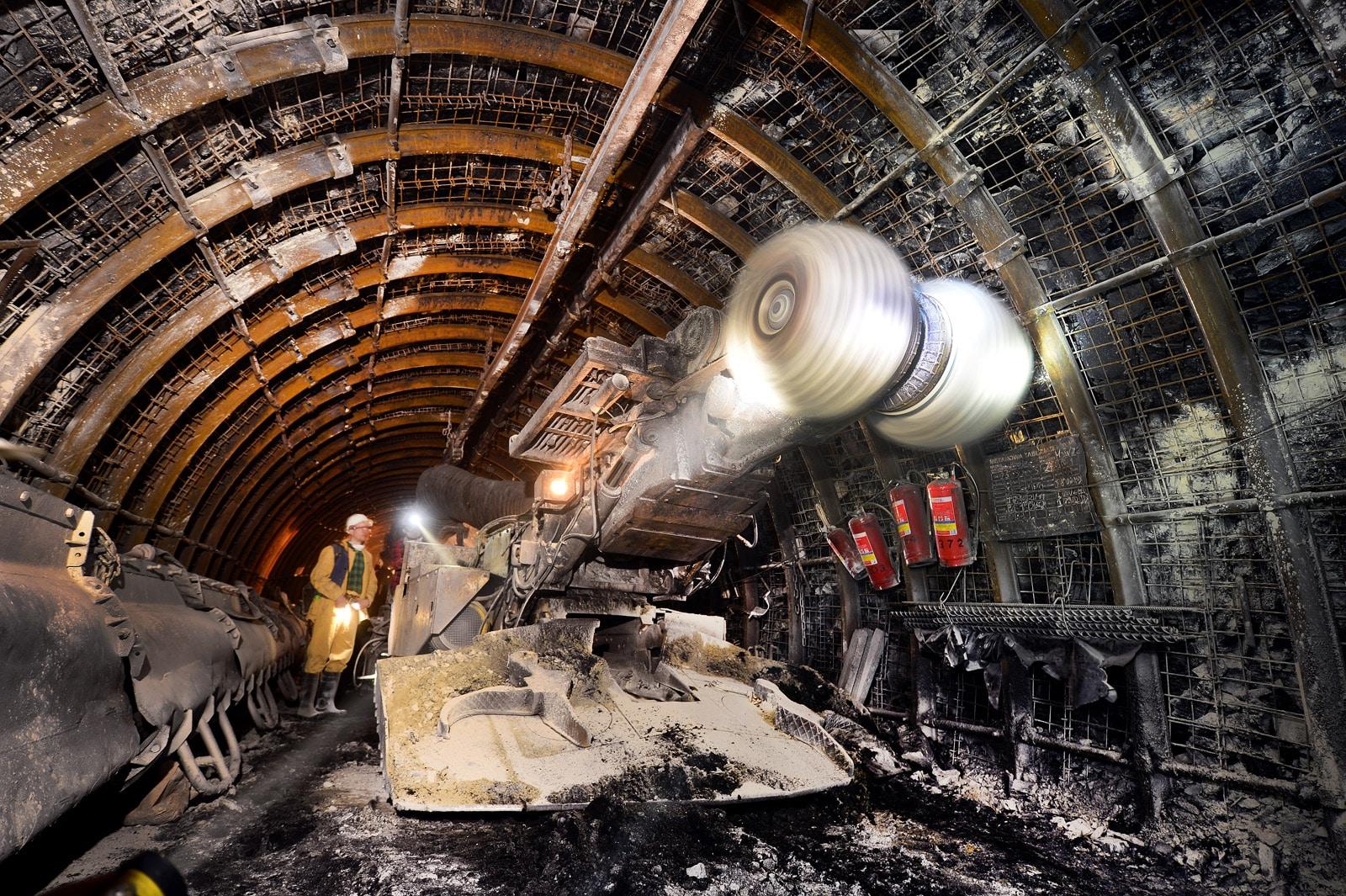
Hard rock projects place higher demands on cutting power, machine stability, cutting tool durability, and maintenance planning.
The following factors should be evaluated:
● Uniaxial compressive strength (UCS) of the rock
● Rock abrasiveness and mineral composition
● Required roadway height and width
● Cutting pick consumption and replacement requirements
● Machine weight, traction, and structural stability
A higher cutting motor rating does not automatically guarantee better performance in every geological formation.
For medium-section underground roadways, the EBZ230A Medium-Section Hard Rock Roadheader provides a 230kW cutting motor, a maximum cutting area of 28.8m², and a specified rock strength limit of 85MPa.
Projects involving harder formations or more demanding excavation conditions should be assessed against higher-capacity machines.
Transportation and ventilation roadways are essential to underground mine development.
Transportation roadways provide access for equipment and material movement, while ventilation roadways form part of the mine's airflow network.
Roadheaders are particularly useful when excavation requires controlled roadway dimensions, changing alignments, or different cross-sectional profiles.
Smaller roadways require machines with suitable body dimensions and operating clearance.
Larger transportation entries may require increased cutting width, cutting height, machine stability, and material handling capacity.
The EBZ340S Versatile Hard Rock Roadheader is designed for projects requiring greater cutting coverage and adaptability to different underground roadway dimensions.
The final selection must consider the complete cutting envelope, not only the maximum cutting area.
Civil engineering projects such as roadways, railways, and subways leverage roadheaders to create tunnels in urban settings, where surface disruption must be kept to a minimum.
Roadheader machines can be used in selected railway and road tunnel projects where geological conditions are suitable for mechanical cutting.
They are particularly relevant to excavations requiring flexible tunnel shapes, local enlargement, cross-passages, or changes in tunnel geometry.
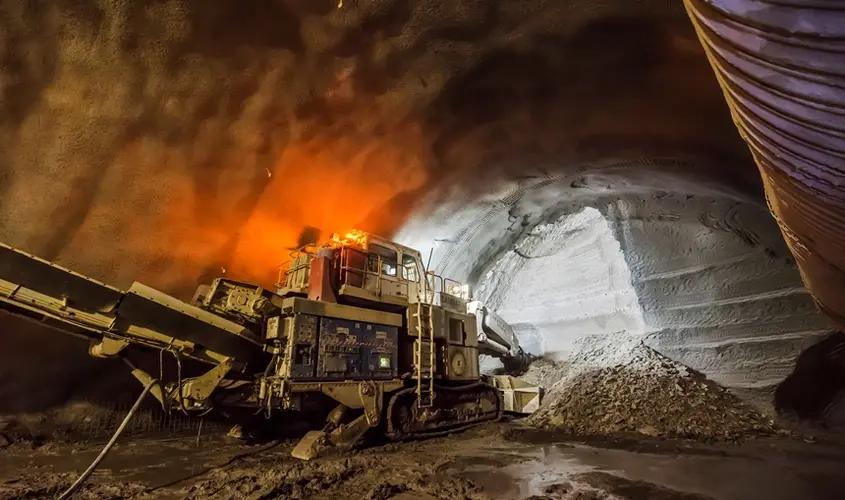
● Flexible excavation of non-circular cross-sections
● Controlled mechanical cutting without routine production blasting
● Adaptability to changing excavation profiles
● Ability to excavate selected tunnel sections and localized underground openings
Roadheaders are not suitable for every tunnel project. Very hard, massive, and highly abrasive formations can significantly affect excavation productivity and cutting tool consumption.
Long tunnels with consistent circular geometry may favor tunnel boring machines, depending on geology, project length, and investment requirements.
For large-section hard rock excavation, WEISHI's EBZ340A Heavy-Duty Hard Rock Roadheader can be evaluated against the project's section dimensions, rock conditions, and equipment access requirements.
Utility companies use roadheader machines to install pipelines and cables, ensuring effective routing without excessive excavation.
Roadheaders can be considered for underground utility corridors, service passages, and selected municipal tunneling works.
These projects may involve limited excavation space, non-circular tunnel sections, and restrictions on vibration.
Mechanical cutting allows the excavation process to be controlled according to the planned tunnel profile.
However, suitability depends on ground stability, groundwater conditions, rock characteristics, and the required tunnel support method.
For confined underground environments, the equipment's transportation dimensions and operating clearance are important considerations.
Roadheaders play a critical role in projects aimed at groundwater management and other environmental remediation tasks where precise tunneling is essential. These may include access tunnels, service passages, and underground chambers.
A roadheader is most appropriate where mechanical excavation is compatible with the rock conditions and the required excavation geometry.
For long-distance or exceptionally hard rock excavation, alternative methods should be evaluated through project-specific technical and economic assessment.
Understanding where roadheader machines are used is only the first step. Buyers must also determine which equipment configuration matches their excavation requirements.
The table below provides an initial selection reference for different underground applications.
|
Application |
Main Selection Concern |
WEISHI Model to Evaluate |
|---|---|---|
|
Narrow coal mine roadway |
Limited space and adequate cutting power |
EBZ230S |
|
Medium-section mine roadway |
Balanced cutting coverage and machine size |
EBZ230A |
|
Complex underground conditions |
Cutting performance, traction and stability |
EBZ260H |
|
Roadways with varying sections |
Adaptable cutting dimensions |
EBZ340S |
|
Large-section hard rock roadway |
Higher cutting capacity and machine stability |
EBZ340A |
|
Excavation with integrated bolting |
Roof support and excavation coordination |
Roadheader-Bolter Series |
These recommendations are preliminary. The final equipment model should be confirmed against project drawings, rock test results, underground transportation conditions, and expected excavation performance.
For more equipment options, visit the WEISHI Roadheader Machine product range.
Despite their versatility, misconceptions about roadheader machines persist. One common error is underestimating their effectiveness in hard rock environments. In reality, modern roadheaders are designed to handle a variety of rock types, with some models featuring robust cutting heads capable of tackling extremely hard geological formations. Additionally, some may assume that roadheaders are only useful for larger projects, but they can also be adapted for smaller tunneling work, providing a cost-effective solution with minimized downtime.
To illustrate the impact of roadheader machines, consider the case of a significant transportation project in urban Germany. During the construction of a new metro line, a roadheader was utilized to excavate over 7 kilometers of tunnel through complex geological layers. Its operation minimized the project's environmental footprint, reduced noise pollution by up to 50%, and enabled work to continue around the clock, thus speeding up completion time. The project's adherence to rigorous testing standards such as ASTM and DIN ensured that the roadheader performed exceptionally well, meeting all safety and operational benchmarks.
In summary, roadheader tunneling machines are vital tools used across multiple sectors for various applications, emphasizing efficiency, precision, and minimal disruption. As industries continue to evolve, exploring the capabilities of these machines can lead to more innovative and effective solutions in underground excavation. Whether for mining, construction, or environmental projects, understanding where roadheader machines are commonly used is essential for stakeholders looking to optimize their operations.
Not sure which roadheader fits your project?
Send us your rock strength, roadway cross-section, project application, and required excavation schedule. Our technical team can help you review suitable roadheader models and configurations.
Explore our Roadheader Machines or Underground Tunneling Solutions for additional equipment information.
Require More Customized Productsand Technical Advice?
Send over your requirements and we can offer one-stop technical advice and Industry solutions to meet your needs.